
Writing Frame
Our project plans and edition options outlined in the quote may appear complex at first glance. To support your understanding, we’ve clearly defined each plan and how it aligns with the overall writing and production process.
1. Image Narration vs. Narrative Writing
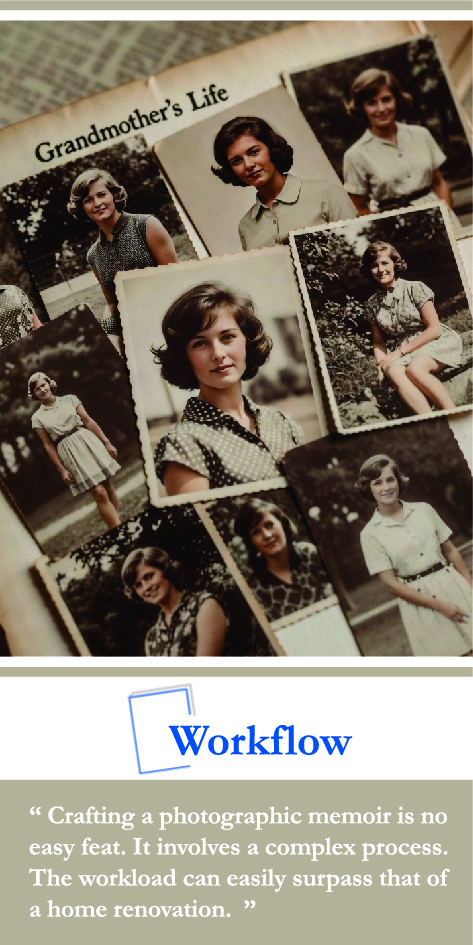
Images are alive—they speak volumes. Behind every photograph lies a hidden truth, a forgotten anecdote, or an untold story waiting to be uncovered. As David Ogilvy, the renowned American advertising pioneer of the 1960s, once emphasized, images must possess “story appeal.” He believed that a compelling photograph should be powerful enough to make people stop and look. This visual hook remains just as vital today, especially in an era where younger generations gravitate toward visual platforms like Instagram, Pinterest, and TikTok Shorts.
That’s why we champion image narration as a powerful gateway into storytelling. A single image can spark curiosity and lead readers into deeper exploration. Through image narration, readers can delve into:
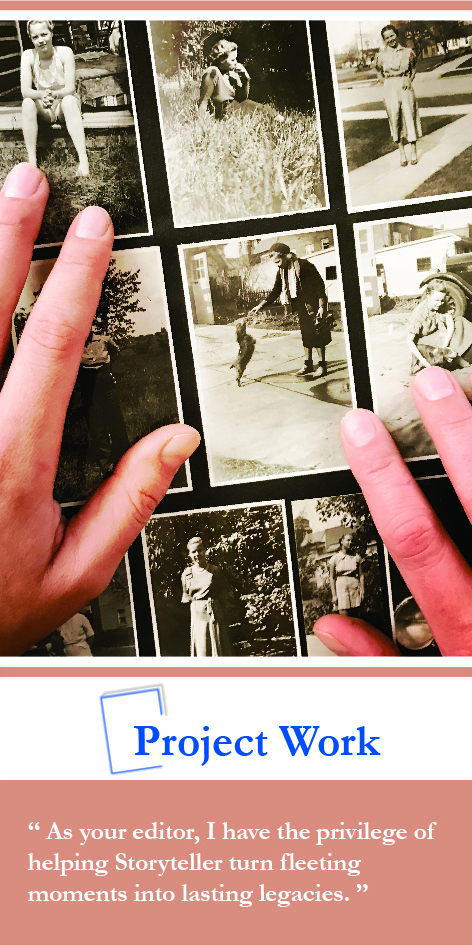
- The visible elements: the subject, photographer, location, time, and context captured in the frame
- Tangible objects: rotary phones, pets, hairstyles—each carrying its own anecdotes and cultural significance
- Intangible aspects: education, income, entertainment, music, transportation—reflecting the lifestyle of the era
- Cultural backdrop: social movements, voting rights, moral values, and societal norms of the time
These components form a mosaic of lived experience, transforming each image into a personal encyclopedia. Our goal is to help storytellers build a bridge to younger readers by revealing the world behind the images—offering a glimpse into life from the 1950s to the 1990s. In this way, images become a time tunnel, transporting readers to another era.
Importantly, the descriptive text accompanying images will not count toward the overall word count of the written piece. These image details can be presented in a dedicated sidebar or column on the page.
In contrast, narrative writing relies solely on words to convey events and stories. Without visual aids, the narrative must be crafted with deliberate structure and engaging plots to capture the reader’s imagination.
2. Signature Lens vs. Storyteller Lens
An experienced film director knows how to distill the emotional essence of a script and guide the audience’s feelings in harmony with the narrative. They understand how to introduce tension—through conflict, contradiction, or clashing perspectives—building momentum until the story reaches its emotional peak. Similarly, our writers possess the ability to transform a straightforward account into a dynamic, immersive experience through their unique signature lens.
A seasoned writer steps into the shoes of the subject, skillfully balancing fact with feeling. They invite readers to experience the subject’s victories, setbacks, fears, and joys. At the same time, they consider the reader’s perspective—crafting compelling hooks, whether through provocative questions or vivid anecdotes, to draw them in from the very first line.
True storytelling resonates most deeply with those who care—loved ones who seek to understand how someone arrived at their present life. Yet we recognize that empathy must be wielded with care. Over-sentimentalizing or glorifying the subject—what we call hagiography—should be avoided.
Our signature lens, whether long-focus lens or short-focus lens, is designed to deliver the message with precision and emotional clarity. It aligns the heartbeat of the readers with that of the author. Why are our writers so adept at this? Because they are teachers who have read and critiqued thousands of essays and narratives. For them, this kind of writing is a piece of cake.
3. Unlimited Words Vs Limited pages
Although the two approaches may appear contradictory, they are not in conflict.
For image narration, we encourage storytellers to delve into the rich details and anecdotes behind each image. The factual writing should remain concise, while the content itself remains vivid and layered. We carefully balance the layout—allocating space between images and text—to ensure both elements coexist harmoniously within the page’s limited real estate.
As for narrative writing, the word count is managed according to the selected edition—whether 16, 64, or 128 pages. All text is formatted consistently to maintain clarity and flow. If the word limit is exceeded, we may reallocate space from image sections or convert portions of the narrative into voice notes. These audio segments can be uploaded to the cloud and accessed via QR codes, allowing readers to experience the story across multiple platforms.
4. Unlimited Images vs. Limited Pages: Printed and Digital Formats
While thousands of digital images may be available, our expertise lies in curating those that most effectively enrich the reader’s experience and align with the storyteller’s narrative. We carefully assess the relevance and emotional resonance of each image, ensuring that only the most meaningful ones are selected.
Images of a similar type or theme are thoughtfully grouped on the same page. Each image is resized and formatted to fit seamlessly alongside the accompanying text, maintaining a balanced and visually engaging layout within the constraints of the printed page.
When the number of selected images exceeds the available space, we offer a digital solution: converting additional images into a cloud-hosted slideshow. These can be accessed via QR codes embedded in the book, allowing readers to explore extended visual content conveniently on their mobile devices.
5. Innovation vs. Interaction
“For goodness’ sake, make memoirs and biographies more fun, more surprising, more practical—so we actually want to read them!” This passionate plea from teenage readers sparked a wave of inspiration within our team.
We believe a compelling storybook should seamlessly blend innovation with interaction. That’s why we’ve introduced an exciting feature: an online “Millionaire” quiz game. This interactive element, complete with incentive-based rewards, motivates readers to engage deeply with the content. As writers narrate stories and describe images, they also craft quiz questions of varying difficulty, aligning with key moments in the narrative to reinforce understanding and curiosity.
In addition, rapid-fire Q&A sessions—captured in video format—bring the storyteller’s voice, laughter, expressions, and personality to life. These dynamic clips offer readers a more intimate connection with the storyteller, transforming the reading experience into a multi-sensory journey.
These creative features emerge from a spirit of experimentation and “mix and match” thinking. Our ultimate goal is to make the book feel alive—an evolving narrative that continues to grow. With supplementary content accessible via QR codes, readers can unlock new layers of the story even after the final page, ensuring the experience extends far beyond the printed book.
6. Agreed Timeline vs. Incentive Program
Just as a film director relies on a finalized script to coordinate cast, crew, and production resources, a writer benefits from a clear, agreed-upon content plan to manage time and collaboration effectively. That said, we fully recognize that creativity is dynamic—new ideas and powerful images often emerge unexpectedly.
If the agreed timeline is met and all planned content is delivered on schedule, we are pleased to offer a 5% incentive discount as a gesture of appreciation. This encourages timely collaboration while honoring the creative process.
Naturally, minor adjustments—such as swapping, removing, or adding a few images or paragraphs—are entirely acceptable during the final proofreading stage. We understand that no story or image is ever truly flawless. What matters most is our shared commitment to refining the work together, within a mutually respected timeline, to create something meaningful and enduring.
7. Master Edition vs. VIP Editions
We deeply understand that certain heartfelt messages or private stories—especially those written for a cherished loved one—deserve to be preserved in a dedicated, one-of-a-kind edition. That’s where the VIP Edition comes in.
The core content remains the same between the Master Edition and the VIP Edition. The key differences lie in the cover design and up to 16 pages of personalized content, allowing space for exclusive messages, photos, or tributes tailored to a specific recipient.
To support this, once all materials are collected, the storyteller is encouraged to outline a clear content plan for the different versions. A proposed table of contents will help guide our editorial team in shaping each edition with care and precision, ensuring every version reflects its unique emotional intent
8. AI Tools vs. Content Craftsmanship
AI is undoubtedly a powerful tool—it can enhance images, adjust tone, and accelerate the editing process. It acts like a hundred helping hands, tirelessly assisting with technical tasks. But what AI lacks is the emotional intuition, cultural sensitivity, and human insight required to shape a truly heartfelt memoir or biography.
That’s where our core team—writer, designer, and project manager—steps in. We don’t just process content; we interpret it. From analyzing raw materials to defining themes, crafting compelling headlines, and anticipating reader response, we shape each story with care and intention. Our goal is not just to document a life, but to evoke it—across print, audio, and digital platforms.
Creative features like the Rapid-Fire Q&A or the Millionaire Game aren’t born from algorithms—they come from lived experience, imagination, and a deep understanding of how people connect with stories. Our role is much like that of a film director: orchestrating every element to produce a life book that is not only beautiful, but deeply moving.
We don’t just want readers to read your book—we want them to study it, to feel it. To see not just your eyes, but your mind. To carry your lessons into their own lives. That is the power of the stories we help you tell. And while AI is one of the tools we use, the soul of the book comes from you—and from us, working together.
 Determination Innovation and Production Limited